
The Kelkar Committee, which was appointed by Finance Ministry to suggest a roadmap for fiscal consolidation, has suggested immediate hike in fuel prices and complete deregulation of diesel prices by start of 2014-15 fiscal.

The 17th daily increase in rates, since oil companies on June 7 restarted revising prices in line with costs after ending an 82-day hiatus in rate revision, has taken diesel prices to fresh highs.
The Union oil ministry is considering a proposal to adopt differential pricing for diesel, under which industrial users like power utilities, will be charged market prices and retail consumers continue to be subsidised.

In absolute terms, both types of cars must cut emissions by about 28-29 g/km. But in percentage terms, the lighter 900-kg car must reduce emissions by 27 per cent, while the 1,500-kg car needs a 22 per cent cut. And the target becomes progressively stringent for both -- but, once again, the tightening is sharper for the 900-kg car than for the 1500-kg car.
State-owned oil companies have announced a hike in petrol prices between 37 and 40 paise in the major cities, while diesel will be costlier by 37 to 44 paise with effect from midnight on Friday.

In 16 days, petrol price has been hiked by Rs 8.3 per litre and diesel by Rs 9.46 - a record increase in rates of the fuel in any fortnight since pricing was deregulated in April 2002.

Reliance Industries Ltd on Thursday said it has halted the use of Russian crude at its export-only refinery in Jamnagar, Gujarat, as the company moves to comply with European Union sanctions. Reliance is India's largest buyer of Russian oil, which it processes and turns into fuel, such as petrol and diesel, at its giant oil refining complex at Jamnagar.
Diesel likely to get cheaper in New Delhi

Tata Motors Passenger Vehicles Ltd expects contribution of SUVs to its overall sales to go beyond 70 per cent with it making foray into the fast growing mid-sized segment with a premium positioning of its Sierra model, according to its Managing Director & CEO, Shailesh Chandra.

India, the world's third-largest oil consumer, spent 2.5 billion euro on buying crude oil from Russia in September, 14 per cent less than the previous month, a European think tank said. India remained the second-largest buyer of Russian fossil fuels in September behind China, according to the Centre for Research on Energy and Clean Air (CREA).

The Curvv hasn't set the sales charts on fire and Tata needs another product aimed straight at the Hyundai Creta, which is where the Sierra fits in.

'We are seeing a lot of people with helmets visiting our showrooms.'

The Andhra Pradesh government has prepared an action plan for relief and essential supplies in pre-cyclone preparedness for Cyclone Montha, expected to cross the coast on October 28.

BMW India CEO says gradual five-year import duty cuts under new FTAs create buyer hesitation and urges government to announce year-wise rates instead.
The Reserve Bank on Tuesday said the government should deregulate diesel prices in order to contain the trade deficit, which is expected to widen to $160 billion during the current fiscal.

Oil Ministry felt it did not have a clear mandate to reduce rates post the January 2013 decision of the Cabinet to raise prices by 40-50 paisa a litre every month.
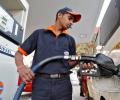
Diesel price on Monday went past the Rs 98-a-litre mark in a few places of Rajasthan as a relentless increase in fuel prices took rates to record-high levels. Petrol price was increased by 29 paise per litre and diesel by 26 paise a litre, according to a price notification of state-owned fuel retailers. The increase - 16th this month - pushed petrol and diesel prices to a fresh all-time high across the country. Sri Ganganagar district of Rajasthan saw petrol price climb to Rs 105.24 a litre and diesel to Rs 98.08 per litre.

This will be the sixth consecutive price cut for petrol since August.

Jet fuel (ATF) price on Wednesday was hiked by 4 per cent in line with firming international oil prices but petrol and diesel rates remained on freeze for a record 10th month in running. Aviation turbine fuel (ATF) price was increased by Rs 4,218 per kilolitre, or 3.9 per cent, to Rs 1,12,356.77 per kl in the national capital, according to a price notification of state-owned fuel retailers. The increase follows three rounds of reduction since November.
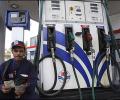
A litre of diesel will cost Rs 48.01 compared to Rs 49.31 at present
The current complex pricing of diesel will give rise to bribery and law-breaking.

Between January and August 2025, over 65,000 units of the Bolero were sold, making it the third-highest contributor to Mahindra's overall SUV sales. Bolero annually achieves sales of over 1 lakh units.

Petrol price had been cut 10 times since August 2014.

Cooking gas or Liquified Petroleum Gas (LPG) price has been raised by Rs 50 per cylinder by distribution companies, Union Oil Minister Hardeep Singh Puri said on Monday.

'Growth will definitely continue to come most from the sub-four-metre SUV segment, primarily because that is where the heart of economy and affordability is. Naturally, that will keep pushing the share of that segment (in overall PV sales) higher.'
Petrol price may be reduced by about Re 1 per litre while diesel price may be hiked by 40-50 paisa a litre from March 15/16.
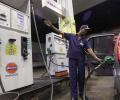
Petrol and diesel prices were hiked by 80 paise a litre each on Wednesday, taking the total increase in rates in 16 days to Rs 10 per litre.

The offroad legend 2025 Mahindra Thar launched at an eye-popping Rs 9.99 lakh, writes Rajesh Karkera/Rediff.com.

According to a report by rating and research agency CRISIL, it now takes six years to recover the premium-between Rs 100,000 on small cars and Rs 300,000 on luxury sedans-paid for diesel variants.
The government on Tuesday ruled out any further increase in diesel and cooking fuel prices even though the current retail rates are lower than their cost of production.
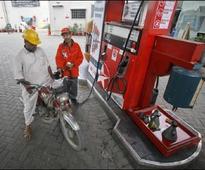
The government on Tuesday said it has agreed in-principle to deregulate diesel prices, but is not considering similar proposal for the cooking gas.
Jet fuel or ATF price on Wednesday was cut by almost 6 per cent after four rounds of monthly increases since July, while commercial cooking gas (LPG) rates were raised by a steep Rs 101.5 per 19-kg cylinder in line with international benchmarks. However, the price of domestic LPG - used in household kitchens for cooking purposes - remained unchanged at Rs 903 per 14.2-kg cylinder. Aviation turbine fuel (ATF) price was cut by Rs 6,854.25, or 5.79 per cent, in the national capital to Rs 111,344.92 per kl from Rs 118,199.17, according to a price notification of state-owned fuel retailers.

The price of liquefied petroleum gas cylinders across all categories, including subsidised LPG, was on Wednesday hiked by Rs 25 per cylinder -- the third straight increase in rates in less than two months.

While the impact on consumer sentiments is obviously positive, the issue is of what this does to under-recoveries of oil companies and competition.
The surprise decision of OPEC and its allies, including Russia, to cut oil output may cause an immediate rise in prices, delaying revision in fuel prices in India, industry sources said. The grouping of Organisation of Petroleum Exporting Countries (OPEC) and its allies, called OPEC+, on Sunday decided to further cut oil output by around 1.16 million barrels. The move led to Brent rising by almost 6 per cent to $84.58 per barrel on Monday.

The GST Council on Wednesday approved two slabs of 5 per cent and 18 per cent effective from September 22, the first day of Navaratri.

Passenger vehicle dispatches from companies to dealers declined 9 per cent year-on-year to 321,840 units in August.
Finance Minister Nirmala Sitharaman on Monday ruled out a cut in excise duty on petrol and diesel to ease prices, which have touched an all-time high, saying payments in lieu of past subsidised fuel pose limitations. Petrol and diesel as well as cooking gas and kerosene were sold at subsidised rates during the previous Congress-led UPA government. Instead of paying for the subsidy to bring parity between the artificially suppressed retail selling price and the cost that had soared because of international rates crossing $100 per barrel, the then government issued oil bonds totalling Rs 1.34 lakh crore to the state-fuel retailers. These oil bonds and the interest thereon are being paid now.

In a much-needed relief to cash-strapped airlines, this is the second straight monthly reduction in rates and the biggest single cut ever.
